Three key takeaways from my presentation at Garter Data & Analytics Summit 2022, Mumbai & Gartner keynotes.
I have engaged with hundreds of enterprises and have seen some amazing transformations, outcomes & innovations. Yet, while technology has been evolving rapidly, the foundational challenges remain the same. If there are just three focus areas that can guarantee success, these would be

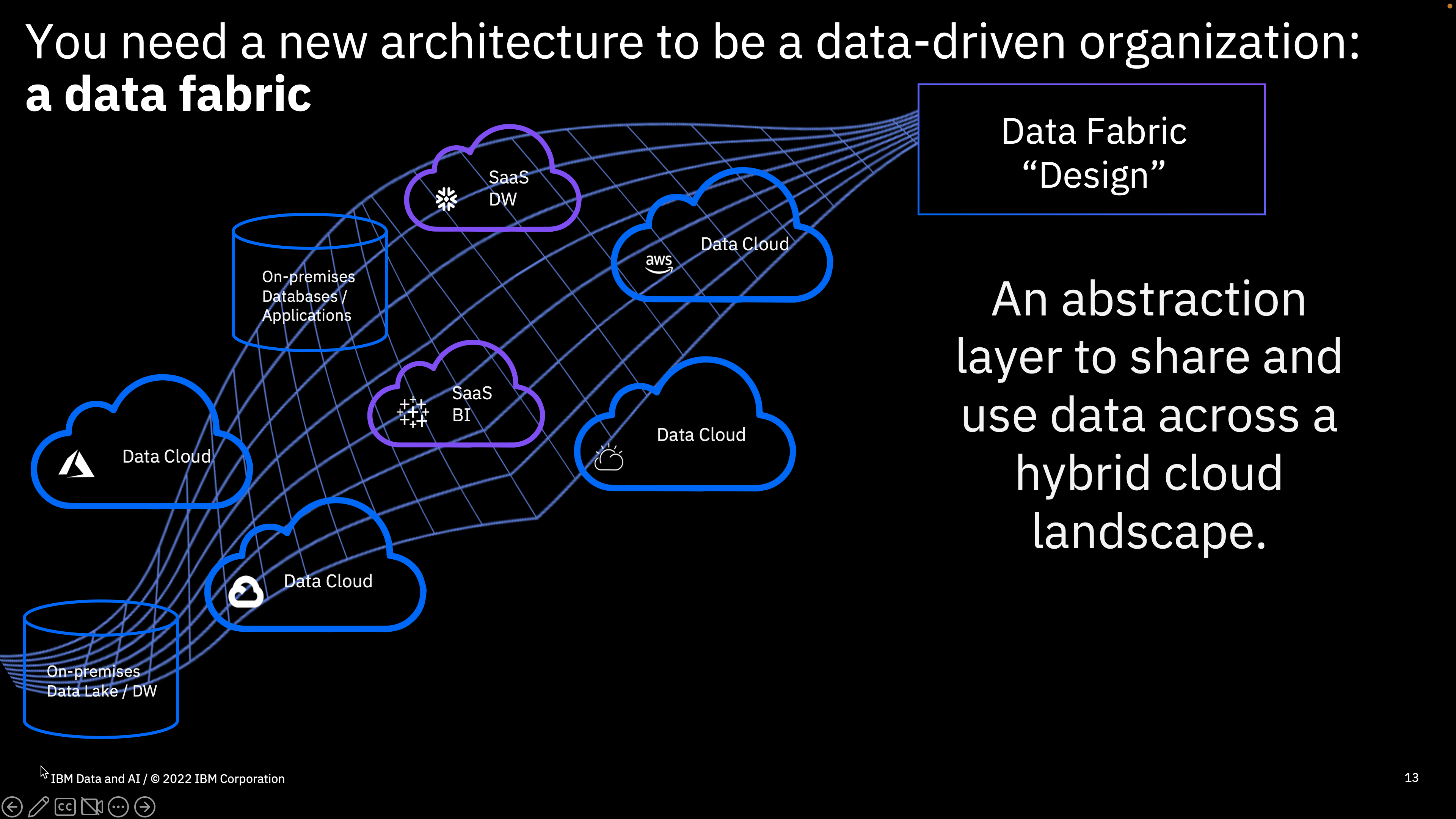
Data – We have seen a need for real-time vs. batch, the complexity of integrating data sources almost triple, adapting to the change in the source system as a de-facto design. We have seen monumental failure with the data lake approach of a single repository. The Data Fabric architecture provides a practical approach that doesn’t require a significant transformation or large investment and focuses on the core of all integration challenges i.e., metadata consolidation. When Machine Learning is applied to this consolidated metadata, it provides a magical view of data relationships, usage patterns, data quality, and profile. Data fabric accelerates data consumption, provides data governance and protection mechanism adaptable to change in the eco-system, and facilitates data sharing.
2. Talent – How fast you and your team can “unlearn” is the most critical aspect of learning in recent times. Community-based learning in the enterprise is vital to keep pace with the changes and build a skill that can help you leverage data. Tools like AutoAI is a great starting point for learning ML/AI for someone new to the field.
3. Trust is built when we put the user in the pilot position and provide a cockpit that offers access to all the relevant information. TrustWorthyAI is an initiative toward ensuring we don’t get into a machine-human conflict, and the model makes a better decision by removing some of the inherited bias.

In terms of the Gartner keynotes themselves, the three key takeaway was
- Gartner claimed that by 2030, synthetic data would completely overshadow real data in AI models.
- De-emphasis on big data and finally acknowledge small data can equally contribute to success if appropriately harnessed.
- Governance was emphasised as a way of working rather than control; however, personally, I was a bit disappointed it came late in the framework.
 Anup Kumar Blog